

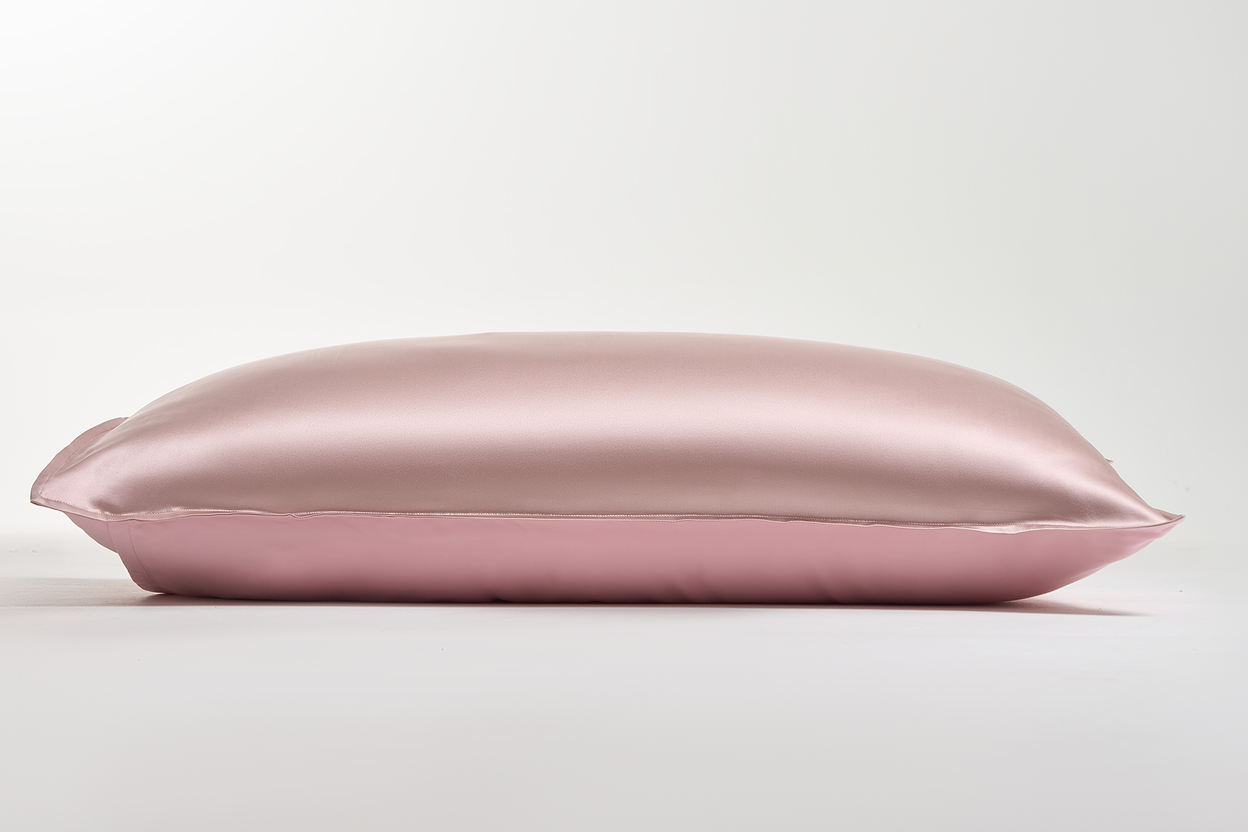
Of all the upgrades you can make to your sleep environment, a silk pillowcase is arguably the most impactful per dollar spent. You're in contact with your pillowcase for six to eight hours every night — your face pressed against it, your hair resting on it. What that surface is made of matters more than most people realize. This guide covers everything you need to know about silk pillowcases: what makes them genuinely different, what the science actually says, and how to choose one that delivers on its promises.
What Is a Silk Pillowcase?
A silk pillowcase is a pillowcase woven from natural silk fiber — specifically, the kind that comes from the cocoons of Bombyx mori silkworms fed on mulberry leaves. This is known as mulberry silk, and it is the benchmark material for any silk pillowcase worth buying.
The key characteristic that sets silk apart from every other pillowcase material is the structure of the fiber itself. Silk is a continuous filament — a single unbroken strand that can run thousands of meters long — which is why silk fabric has such an extraordinarily smooth, uniform surface. There are no short fiber ends sticking up to catch, snag, or create friction. Every thread lies flat, and the result is a surface that your skin and hair glide across rather than dragging against.
Benefits of Sleeping on a Silk Pillowcase
Reduces Skin Friction and Sleep Creases Every time you move during sleep on a cotton pillowcase, your skin drags slightly against the fabric. Over years of nightly use, this friction contributes to the formation of sleep lines — the creases you notice on your face in the morning that, over time, can become more permanent. Silk's exceptionally smooth surface dramatically reduces this friction. Your skin glides rather than pulls, and those morning creases become far less pronounced.
Helps Preserve Your Skincare Routine If you apply moisturizers, serums, or overnight treatments before bed, your pillowcase determines where those products actually end up. Cotton is absorbent by nature — it will draw moisture and product away from your skin and into the fabric throughout the night. Silk is far less absorbent, meaning your skincare investments stay where they belong: on your face, doing their job.
Protects Hair from Overnight Damage Hair is at its most vulnerable during sleep. Hours of contact with a rough surface causes friction that chips away at the hair's outer cuticle layer — leading to frizz, split ends, tangles, and breakage. A silk pillowcase provides a smooth, low-friction surface that allows hair to move freely without snagging. The difference is immediately noticeable for people with fine, curly, color-treated, or natural hair: less frizz in the morning, fewer tangles, and over time, genuinely healthier hair.
Naturally Temperature Regulating Silk is one of the most effective natural thermoregulators. Its protein fiber structure allows it to breathe and respond to body temperature — staying cool when you're warm and gently retaining warmth when the room is cool. For anyone who tends to sleep hot, or who wakes up with a flushed, warm face, switching from cotton to silk can make a noticeable difference.
Hypoallergenic and Gentle on Sensitive Skin Silk contains sericin, a natural protein that inherently resists dust mites, mold, and common allergens. For people with eczema, rosacea, acne-prone skin, or general skin sensitivity, silk creates a cleaner, less irritating contact surface than cotton or synthetic alternatives. The smoothness of the fabric also means no rough texture abrading already-reactive skin throughout the night.
A Genuinely Luxurious Feel Beyond the functional benefits, there is simply the experience of it — cool, smooth, weightless against your face. A silk pillowcase transforms the ordinary act of going to bed into something that feels considered and indulgent. It's a small luxury with an outsized effect on how your bedroom feels.
What to Look for When Buying a Silk Pillowcase
The silk pillowcase market ranges from genuinely excellent products to overpriced impostors. Here's what actually separates the two.
Momme Weight — 22mm to 25mm for Pillowcases Momme (mm) is the unit used to measure the weight and density of silk fabric. For pillowcases, 22mm is a very good standard — smooth, durable, and noticeably luxurious. At 25mm, the fabric becomes heavier, more opaque, and even more durable, with a slightly richer drape and a more substantial feel. Anything below 19mm tends to feel thin and won't hold up well over repeated washing.
100% Mulberry Silk — Not Satin, Not Blends This is the most important distinction. Many products marketed as "silk pillowcases" are made from polyester satin — a completely different material that mimics the sheen of silk but shares none of its benefits. Polyester satin doesn't breathe, doesn't regulate temperature, and offers minimal skin or hair benefit beyond a slightly smoother surface than cotton. Always check: the label must say 100% mulberry silk, with a clear fiber content declaration. If it just says "satin" or "silk-like," it isn't silk.
Grade 6A Silk Silk is graded from A to 6A based on fiber length, uniformity, and quality. Grade 6A is the highest — the longest fibers, the most consistent weave, the smoothest surface, and the greatest durability. A 6A-grade pillowcase will feel noticeably different from lower-grade silk, and it will maintain its softness and sheen far longer after repeated washing.
Closure Style Look for an envelope closure or hidden zip. An exposed zip creates a hard edge that can press against your face or neck during sleep — uncomfortable and potentially irritating for sensitive skin. An envelope-style closure keeps the opening neat and flat, with no hardware making contact with your face.
Stitching Quality Check that seams are even, tight, and finished cleanly. Loose seams unravel after washing; rough or raised seams sit against your face. Quality stitching is a small but reliable indicator of overall product care and longevity.
Silk Pillowcase vs Cotton Pillowcase
Cotton is the default — the material most people have slept on their whole lives. Here's how it actually compares to silk:
|
|
Silk Pillowcase |
Cotton Pillowcase |
|
Surface friction |
Exceptionally low — skin glides |
Moderate to high depending on thread count |
|
Sleep creases |
Significantly reduced |
More pronounced over time |
|
Hair friction & breakage |
Minimal |
Accumulates with nightly use |
|
Skincare absorption |
Low — product stays on skin |
High — absorbs moisturizers |
|
Temperature regulation |
Adapts to body temperature |
Breathable but less adaptive |
|
Hypoallergenic |
Naturally resistant to allergens |
Generally safe, not inherently resistant |
|
Moisture retention for skin |
Preserves natural hydration |
Draws moisture from skin |
|
Price |
Premium investment |
Wide range, accessible |
|
Care |
Delicate wash required |
Machine washable |
The honest answer is that cotton — especially high thread count cotton — is a perfectly good pillowcase. But it cannot match silk on the specific things that matter most for skin and hair health: friction, moisture, and temperature. If those are priorities, silk operates in a different category.
Silk Pillowcase vs Satin Pillowcase
This comparison matters because satin pillowcases are often sold alongside silk ones at dramatically lower prices — and the distinction isn't always made clear.
Satin is a weave type, not a fiber. A "satin pillowcase" is almost always made from polyester woven in a satin pattern, giving it a shiny, smooth appearance. It does offer somewhat less friction than standard cotton, which is why it's often marketed for hair and skin benefits. But polyester doesn't breathe, doesn't regulate temperature, and doesn't have the hypoallergenic properties of silk. It also tends to feel slightly sticky against warm skin and can trap heat overnight.
Silk is both a fiber and, when woven in a charmeuse pattern, a satin-weave fabric. The smoothness, breathability, and all the genuine benefits come from the silk fiber — not the sheen. A polyester satin pillowcase is a budget approximation. A mulberry silk pillowcase is the real thing.
How to Care for a Silk Pillowcase
Silk is more delicate than cotton, but caring for it properly is straightforward:
● Hand wash in cool water with a gentle, pH-neutral silk detergent — or use a delicate/silk machine cycle in a mesh laundry bag.
● Never use bleach, biological detergents, or fabric softeners — these degrade silk protein fibers.
● Do not wring or twist — gently press out water and lay flat or hang in shade to dry.
● Avoid tumble drying on high heat — if using a dryer, use the lowest heat setting or air-dry only.
● Iron at the lowest setting if needed, on the reverse side while still slightly damp.
● Wash separately from items with hooks, zips, or Velcro that could snag the fabric.
A well-cared-for silk pillowcase will maintain its softness and sheen for years — and many people find it improves slightly with careful washing over time.
Who Benefits Most from a Silk Pillowcase?
A silk pillowcase is genuinely useful for almost anyone, but the people who will notice the most immediate difference are:
● Anyone with acne-prone or sensitive skin — less friction, less bacteria-trapping absorbency
● People following serious skincare routines — products stay on the skin, not in the fabric
● Anyone with fine, thinning, or fragile hair — where every breakage counts
● Curly and wavy hair types — where frizz reduction and curl preservation are daily goals
● Color-treated or chemically processed hair — where the cuticle is already more vulnerable
● Hot sleepers — who will feel the temperature-regulating difference immediately
● Anyone who has noticed sleep creases — and wants to slow their progression over time
Why a Silk Pillowcase Is One of the Best Sleep Investments You Can Make
A silk pillowcase occupies a rare category: it is a genuine luxury that is also genuinely practical. It costs more than a cotton pillowcase upfront, but it serves you for years, improves your skin and hair every single night, and makes your bed feel like somewhere you actively want to be.
When you consider that you spend roughly a third of your life with your face against your pillowcase, the upgrade cost per night is remarkably low — and the cumulative benefit to your skin, hair, and morning routine is real, consistent, and compounding.
Explore the Zensage Silk Pillowcase Collection
The Zensage Silk Pillowcases offers a focused range of premium mulberry silk pillowcases — each made to deliver the full benefits of genuine silk at the highest available quality standard.
25mm Mulberry Silk Pillowcase (from $58 per piece) Crafted from 25mm mulberry silk — one of the heaviest, most durable weights available for pillowcases. The added density gives this pillowcase a noticeably substantial feel: richer in drape, more opaque, and built to maintain its softness and sheen through years of regular washing. At 25mm, this is the premium standard for anyone who wants the best possible silk sleep surface. An excellent entry point into silk bedding at an accessible single-piece price.
Mulberry Silk Pillowcase — Swan Series (from $88 per piece) The flagship pillowcase in the Zensage silk bedding range. The Swan series is crafted in 22mm mulberry silk with meticulous attention to construction — smooth, cool, and beautifully finished. Designed to pair seamlessly with the 22mm Swan Mulberry Silk Cover for a complete, cohesive silk sleep setup. A refined choice for anyone building out a full silk bedroom.
Both pillowcases are available individually, making them an easy and affordable first step into silk bedding — or a thoughtful standalone upgrade to an existing setup.

Leave a comment
This site is protected by hCaptcha and the hCaptcha Privacy Policy and Terms of Service apply.